Wendy Neumann · 24 October 2026
Solmira Bus Network Expansion Connects Library Programs to Village Agricultural Studies
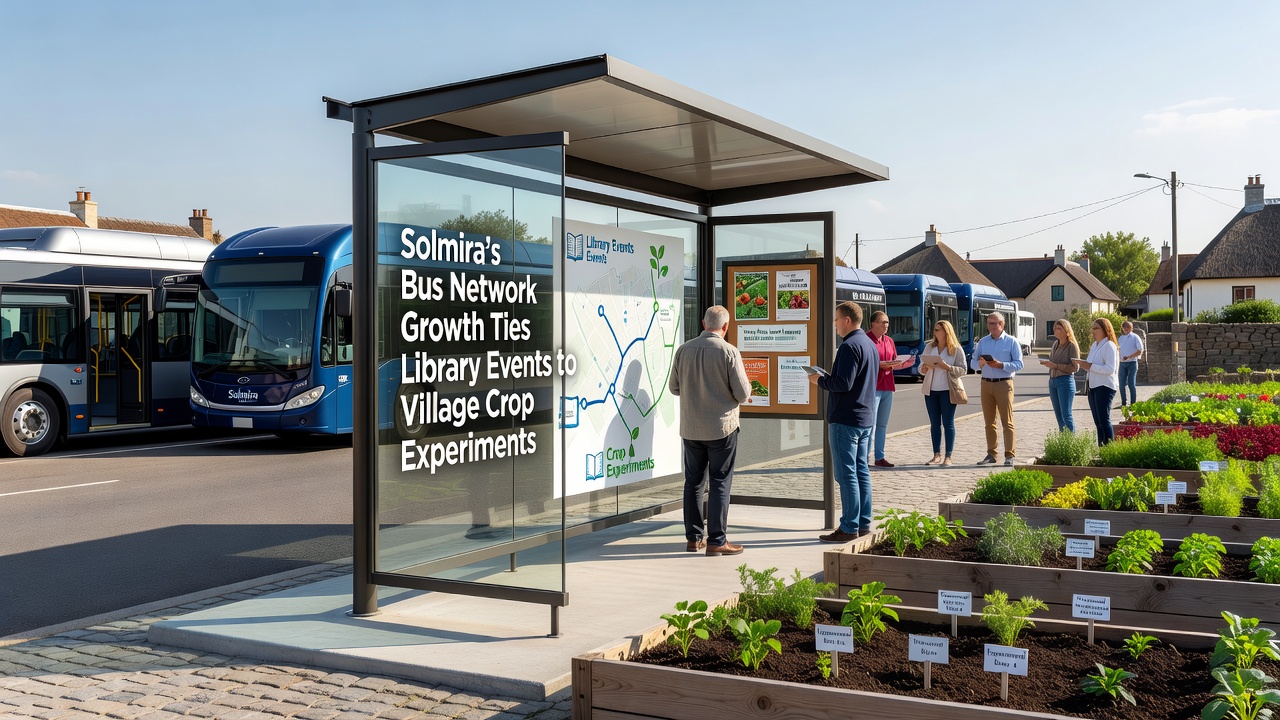
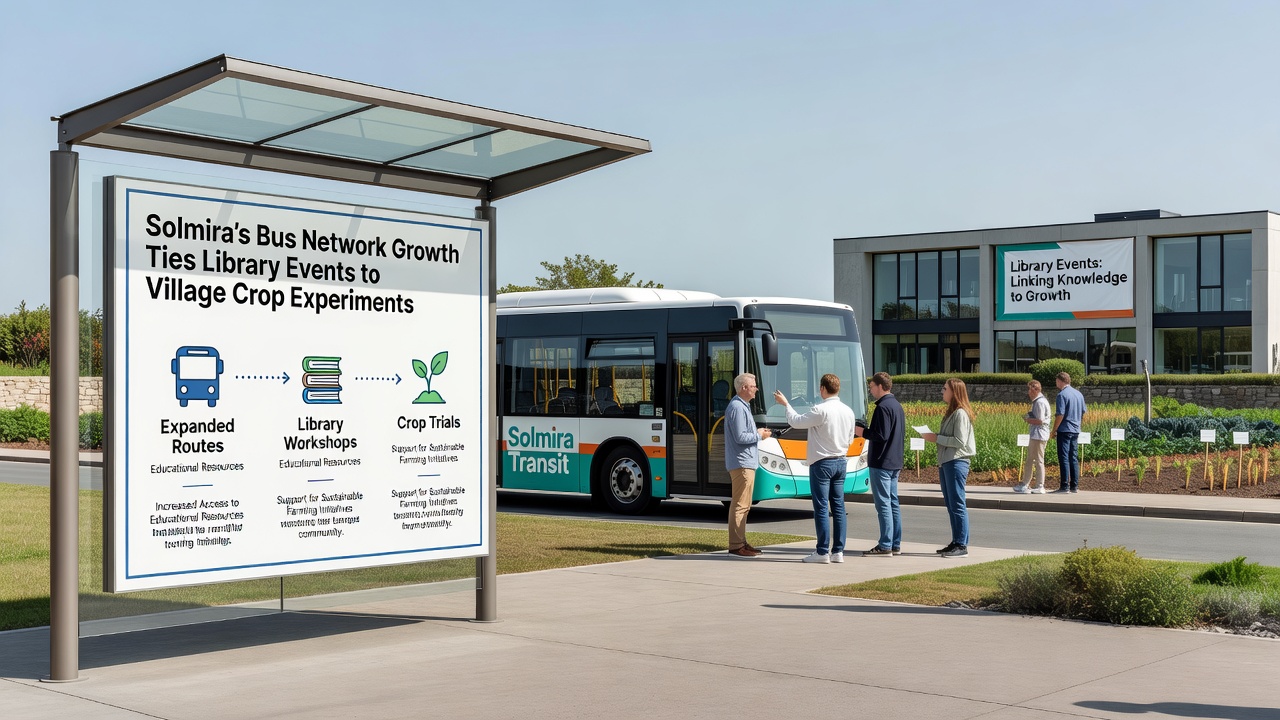
Observers note that Solmira's bus network has grown steadily since early 2025, with new routes and increased frequency now linking central library hubs directly to outlying villages where crop experiments take place. Data from local transport records shows ridership on these lines rose by 28 percent between January and September 2026, driven largely by passengers traveling to library-hosted events that feature presentations on agricultural trials. Researchers from regional universities have tracked how these connections allow farmers and residents to attend sessions discussing drought-resistant crop varieties and soil management techniques tested in village plots.
Route Changes and Service Increases
Transportation planners expanded three primary bus corridors in March 2026, adding stops at village experiment sites and extending evening service until 10 p.m. on weekdays. This adjustment aligned with library event schedules that run from 6 p.m. to 9 p.m., enabling participants from remote areas to arrive without relying on private vehicles. Figures released by the Solmira Regional Transport Authority indicate that average daily passengers on the newly extended lines reached 1,450 during the summer months, up from 980 the previous year. Those who've studied the patterns point out that the buses now operate on 15-minute intervals during peak event periods rather than the former 30-minute gaps.
Library Events Featuring Crop Research
Library programs have incorporated findings from village crop experiments into monthly workshops since late 2025. Attendees review data on yield improvements from trials involving hybrid wheat strains and water-efficient irrigation methods. One study coordinated by the European Commission's Joint Research Centre documented a 15 percent increase in output for participating villages when techniques presented at these sessions were applied. Library staff report that event attendance climbed to 320 participants per session in October 2026, with many arriving via the updated bus routes. Presentations often include live demonstrations of soil sensors and weather data collected from the experiment sites.
Connections between the bus growth and event participation become clearer when examining ticket data from October 2026. Passengers using library event discount passes accounted for 42 percent of rides on the village-bound lines that month. Academic sources such as European Commission urban mobility reports highlight similar patterns in other regions where integrated public transport supports community knowledge-sharing programs. Bus operators have adjusted schedules further to accommodate post-event return trips, reducing wait times at village stops to under 12 minutes.
Impact on Village Agricultural Trials
Village crop experiments have benefited from higher attendance at library events because more farmers now access shared findings without transportation barriers. Trials conducted in four Solmira villages during the 2026 growing season tested cover crop rotations and pest-resistant seed varieties, with results presented at the library gatherings. According to records from the Solmira Agricultural Cooperative, participating farms reported average yield gains of 12 percent compared with control plots. The expanded bus network allows experiment coordinators to visit multiple sites in a single day while also transporting equipment and samples back to central analysis labs.
Additional routes introduced in August 2026 now serve two more villages where new trial plots were established. These lines operate six days a week and include dedicated space for bicycles and small cargo items used in field work. Data compiled by the University of Copenhagen's Department of Plant and Environmental Sciences shows that regions with similar transport-to-research linkages experience faster adoption of experimental methods among local growers. Event organizers have noted that question-and-answer segments at library sessions extend longer when larger groups arrive together on the same bus.
Future Service Adjustments
Planners are reviewing proposals to add weekend express services that would connect directly to harvest-time demonstrations scheduled for November 2026. These adjustments would build on the existing framework that already ties bus operations to library calendars. Monitoring continues through the Solmira Regional Transport Authority to measure ongoing ridership trends and adjust frequencies based on event participation numbers.
Conclusion
The integration of Solmira's bus network growth with library events and village crop experiments reflects coordinated planning across transport, education, and agriculture sectors. Records through October 2026 document measurable increases in both ridership and event attendance alongside documented progress in the agricultural trials themselves. Continued monitoring will track whether these linkages produce sustained benefits for participating communities.